Beetle Adult Coloring Page: An Embroidery Review
When a new design crosses my desk, I never immediately think about how it looks on a screen. I picture it stitched onto linen, resting against denim, or peeking out from a folded tote. The Beetle Adult Coloring Page arrived as a crisp set of vector and raster files, and I immediately recognized that quiet, detailed mood that makes certain line art perfect for embroidery. This isn't a pre-digitized embroidery file ready to load onto a machine, but a thoughtful graphic starting point that belongs in the toolkit of any craft business owner who enjoys creating fully custom stitched pieces.
As a graphics product from the Coloring Pages Amp category, the design comes in EPS, PDF, SVG, and PNG formats. That versatility means you can easily pull it into digitizing software, tweak the line weights, and build your own machine embroidery design exactly how you want it. Before I rushed to stitch, I spent time with the artwork itself—the way the beetle's body curves, how the antennae taper, the thoughtful spacing in the wing casings. That kind of planning is what separates a rushed product from a polished handmade product.
First Glance: A Quiet, Organic Mood
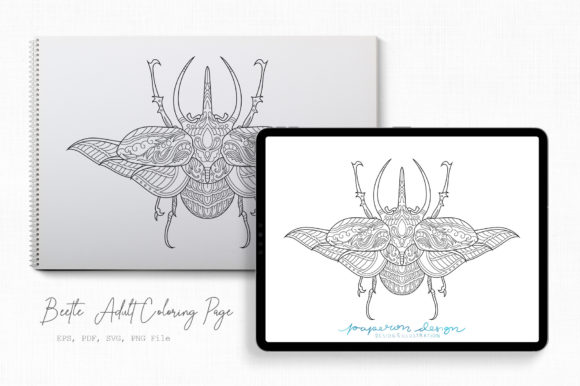
What struck me immediately about the Beetle Adult Coloring Page was its restraint. There’s no frantic detail, no overly fussy linework. The beetle is rendered with a naturalist’s eye—symmetrical enough to feel balanced, but with enough organic irregularity to avoid looking manufactured. The segmented legs, the gentle curve of the abdomen, and the delicate dotting along the thorax give it a vintage field journal quality. That mood translates beautifully into thread, where a satin stitch outline can mimic fine pen work.
For embroidery designers who want to create pieces that feel grounded and slightly nostalgic, this design is a solid pick. It doesn’t scream “trendy bug.” It whispers “specimen illustration” and pairs wonderfully with muted color palettes, linen textures, and simple branding. I immediately thought of tea towel sets, pillow covers for a cabin-themed shop, or even a series of embroidered patches for outdoor apparel.
Translating Line Art to Live Stitching
One of the biggest mistakes I see in embroidery is trying to directly replicate every tiny detail from a coloring page. The Beetle Adult Coloring Page has a fair amount of internal linework—those delicate wing seams, the antenna segments, and the tiny leg joints. If you tried to stitch every single one at a small scale, you’d end up with a dense, puckered mess. Instead, I treat the original file as a thoughtful blueprint. I can simplify, merge shapes, and choose which lines become running stitch accents and which become bold fill stitch areas.
In my digitizing software, I imported the SVG version first. The clean vector paths let me quickly assign stitch types. The main body outlines became a dual-layer satin stitch for definition. The wing divisions I kept as a light running stitch, almost like an etching. The six legs, which can easily become blobs if not handled carefully, I tested as single-pass satin lines with a slight underlay. The result was a crisp, readable beetle that kept all the character of the original artwork without overwhelming the fabric.
Real Project: A Tote Bag for a Slow-Living Brand
I often test new designs by imagining a specific client. This time, I pictured a small batch of custom apparel for a nature-inspired boutique—maybe a run of organic cotton tote bags meant to be sold alongside botanical candles and seed packets. The Beetle Adult Coloring Page felt like the perfect accent. Not too large, not too cute, just a thoughtful emblem that suggests a connection to the natural world.
I digitized the design at about four inches wide, ideal for the lower corner of a tote bag design. I chose a tonal thread palette: a warm charcoal for the body, a muted olive for the subtle wing shading, and a barely-there cream for the tiny eye dot. The result after stitching on a medium-weight canvas tote was exactly what I wanted—a design that someone would notice on a second glance, that invites the viewer to lean in. That’s the kind of finished product that builds customer trust and sets a boutique branding tone.
Why the Pleasing Symmetry Matters
Beetle designs can sometimes feel too rigid or too cartoonish. This one, thanks to the hand-drawn feel of the original artwork, stays elegant. The symmetry is present but not perfect, which makes the embroidered version look like a custom illustration rather than a mass-produced icon. For Etsy sellers and small shop merchandise creators, that distinction is huge. Buyers can tell when a stitched piece has soul, and this design brings that.
Fabric, Hoop Size, and Stabilizer Decisions
Before you commit to a project, spend a few minutes testing. I always recommend stitching the Beetle Adult Coloring Page on a scrap of the same fabric you plan to use. Here’s what I learned through my own sampling:
- Woven fabrics like linen, cotton canvas, and quilting cotton are your best friends. The crisp lines of the beetle hold beautifully without distortion.
- Stretchy fabrics like jersey or ribbed knit require a heavy cut-away stabilizer and careful hooping. The legs can shift if not properly supported, so I’d avoid baby onesies or thin t-shirts unless you’re confident with your digitizing density.
- Dark fabrics are a natural choice—the beetle almost glows when stitched in lighter thread—but you’ll need to adjust your design’s contrast. The PNG file can be printed as a printable mockup to test visibility before stitching.
- Small hoop sizes (under 4x4 inches) will force you to simplify. I’d reduce the leg count or merge the wing lines if you must go that small. The design truly shines at 4 inches and above.
For stabilizer, I used a medium-weight tear-away on my tote, with a layer of mesh cut-away for added durability. If you’re planning a kitchen towel or a pillow cover that will get washed, a fusible no-show mesh stabilizer is a safer bet to keep the beetle’s legs from curling over time.
Thread Colors and Stitch Personality
One of the joys of working with a high-contrast line art file like the Beetle Adult Coloring Page is the thread freedom. Because the design is essentially a detailed outline, you can go monochromatic with a single rich color—think deep rust, forest green, or dusty navy—and it reads beautifully. Or you can use a subtle two-tone approach: a darker thread for the main body outlines and a lighter shade for the wing details. I’ve even seen a version done in metallic gold on a dark charcoal sweatshirt embroidery that looked like a museum piece.
I advise checking your thread color contrast before committing to a full run. The EPS and SVG files let you quickly fill the design in your software to preview different palettes. A design that looks crisp in black-and-white can become muddy if you pick a thread that’s too similar to your fabric. I always test in black and white first, then introduce muted tones. The beetle’s natural subject matter doesn’t need bright, artificial colors; it responds better to earthy, subdued combinations that feel authentic.
Where the Design Performs Best
After working with the Beetle Adult Coloring Page on several sample projects, I’ve settled on a few favorite applications that feel like a natural fit:
- Linen tea towels and aprons for kitchen gift sets. The beetle adds a botanical touch without being overly feminine or masculine.
- Canvas tote bags for nature centers, farmers’ markets, or any boutique product line that values understated design.
- Embroidered patches with a raw-edge finish. The beetle’s shape lends itself to a freestanding patch that can be sewn onto jackets, hats, or backpacks.
- Holiday gifts or personalized gifts—imagine a set of cocktail napkins with a single beetle in the corner, paired with a thoughtful card.
- Nursery decor and baby embroidery projects, especially if you’re creating a whimsical woodland or insect-themed blanket. The beetle is gentle enough for a child’s space.
In each case, the design’s quiet personality lifts the handmade presentation and adds a sense of professionalism that generic bug graphics simply can’t match.
When to Use Caution and Adjust
No design is perfect for every situation, and the Beetle Adult Coloring Page does have a few edges that require care. The antennae, while beautifully drawn, are extremely thin. In a stitch file, they can become distorted if the stitch density is too high or if the fabric shifts. I recommend running a practice piece on a curved surface like a cap or a hat brim—the beetle’s horizontal orientation can warp if you’re not careful with hooping.
For layered garments or items with seams, avoid placing the beetle directly over a thick seam. The legs crossing a bulky seam will look uneven. Also, if you’re using the design on a thin fabric like a lightweight t-shirt, consider removing some of the tiny inner leg details to prevent perforation. The PNG file can be printed as a reference to mark where adjustments are needed.
And always, always test the design in black and white before committing to a final color thread. The beetle’s readability depends on clear contrast. A dark thread on a dark fabric will lose the delicate wing linework, turning your beetle into a blob. Use the printable mockup function to preview the effect before you stitch.
Commercial Use and Licensing Notes
If you’re a small business owner or an Etsy seller planning to sell finished pieces, pause and verify the license. The product description provides the file formats but doesn’t specify commercial terms. Always check with the original graphics provider whether you can stitch and sell the finished embroidered product commercially. Many coloring page files are intended for personal use; securing a commercial license upfront protects your craft business and keeps your shop running smoothly.
I also recommend keeping a record of your license and any modifications you make to the original artwork. A well-documented process builds brand consistency and helps if you ever need to recreate a popular design for a repeat customer.
Fitting the Design into Your Embroidery Workflow
Because the Beetle Adult Coloring Page is a digital embroidery file starting point rather than a finished stitch file, it fits naturally into a workflow where you already digitize your own designs. I spent about twenty minutes converting the SVG, adjusting stitch angles, and testing on scrap cotton. That’s a small investment for a design that can then be reused across multiple embroidery projects and product lines. I’ve already saved the digitized beetle in three sizes for future use.
For embroidery designers who sell digital design assets, this file could also be incorporated into a larger collection. Consider pairing it with other insect illustrations, botanical line art, or vintage specimen labels. The EPS CS6 format ensures compatibility with older software, which is a thoughtful touch for designers who haven’t upgraded.
Final Thoughts from a Maker’s Perspective
After putting the Beetle Adult Coloring Page through real stitching, washing, and close inspection, I’m confident it’s a strong addition to a designer’s library. It’s not a flashy, moment-in-time trend; it’s a quiet, considered piece of art that translates into thread with grace. The beetle’s mood is serene, its shape is practical for embroidery, and its versatility across custom apparel, home decor, and personalized gifts makes it a reliable workhorse rather than a one-off novelty.
If you’re the kind of maker who values giftability, buyer engagement, and the kind of slow, careful stitching that customers notice, this design deserves a spot in your test hoop. Take your time with the digitizing, choose your fabric and thread thoughtfully, and you’ll end up with a finished product that feels more like a small piece of art than a simple decoration.