Lily Flower Coloring Pages for Adult Kdp: A Designer’s Review
The other day I was planning a small spring collection for a local craft fair — a set of linen tote bags with delicate, hand-drawn floral embroidery. I needed something that felt calm, botanical, and just detailed enough to catch the eye without turning into a stitching nightmare. I downloaded Lily Flower Coloring Pages for Adult Kdp on a whim, not entirely sure if a coloring page vector would translate into a clean embroidery project. It did, and I’ve been thinking about its real-world potential ever since.
What the Design Instantly Communicates
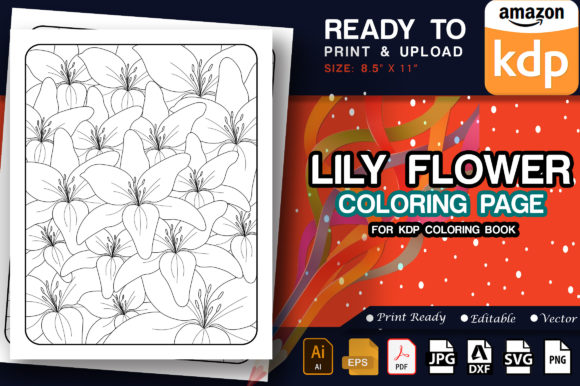
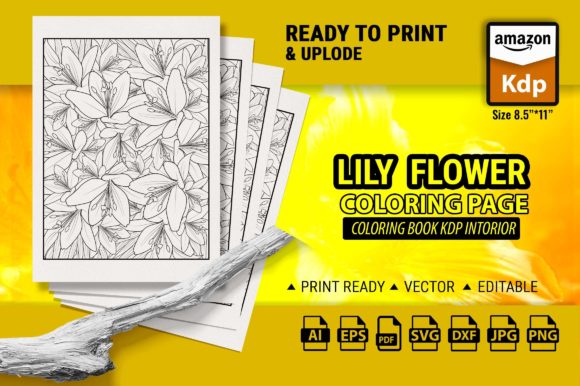
When I opened the file, the first thing that struck me was the mood. This isn’t a loud, splashy bouquet. The lily outlines are elegant, with a quiet, almost vintage botanical print feel. The vector file is built at 8.5×11 inches, which gives you plenty of breathing room to scale without losing line quality. As an Adobe Illustrator file, it’s crisp, and the line art has a steady contour that embroidery digitizers will appreciate. The petals are layered softly, the leaves have a natural sway, and the overall composition feels balanced — not too sparse, not overcrowded. For a digital product categorized under Coloring Pages Amp and sold as Graphics, it carries a surprising amount of visual sophistication.
I immediately pictured it stitched in a single color — maybe a muted sage green or a dusty terracotta — on a natural linen background. It’s the kind of design that makes a handmade product feel intentional, not just decorated. The lily motif has a timeless quality, so it won’t scream “2025 trend” and fade out next season. For someone running a small embroidery shop, that kind of longevity matters deeply.
Where This Design Naturally Fits in a Real Embroidery Business
I tested the design idea on a few different product mockups before committing to a stitch-out. Here’s where it shined the brightest.
Custom Tote Bags and Market Totes. The lily’s silhouette works beautifully on a flat, sturdy canvas. With a running stitch outline or a light satin stitch, the design reads instantly even from a few feet away — great for craft fair tables where customers glance quickly. I used a medium-weight cotton tote and a cutaway stabilizer, and the result looked like a premium boutique item.
Linen Pillow Covers and Home Decor. This is where the lily really belongs. The botanical line art feels like something you’d find in a high-end home goods store. I mocked up a 16×16 inch pillow cover with the design centered, using a soft grey thread on oatmeal linen. The visual impact was gentle but unmistakable. For Etsy sellers specializing in farmhouse or minimalist home decor, this design could easily become a signature piece.
Kitchen Towels and Tea Towels. A smaller version of the lily, placed on a flour sack towel, gave a fresh, spring-like feel. Because the design is vector, scaling it down to fit a 4×4 or 5×7 hoop was straightforward, though I’d recommend simplifying the smallest petal details if you go too small — more on that later.
Lightweight Apparel and Accent Pieces. I imagined it on a denim jacket back panel, or placed modestly on a cotton blouse near the neckline. The design doesn’t scream “coloring page” when stitched; it reads as a refined outline drawing. For children’s clothing, though, I’d be thoughtful — the lily is elegant, but a poppy or daisy might feel more playful for kids. Since the product description mentions a Poppy Flowers book, it’s a good reminder that the specific flower name matters less than the overall shape language. The lily feels more adult or mature, which aligns with the “Adult” in the title.
When You Need to Stitch With a Little Extra Care
As much as I enjoyed the design, it’s not a one-size-fits-all solution. A few fabric and product situations call for caution.
Small hoop sizes. If you try to cram the entire 8.5×11 composition into a 4×4 hoop, the inner petal lines and leaf veins will get dangerously close together. The stitch density could mangle the fabric, and the details will blur. I’d recommend splitting the design into smaller clusters for tiny hoops, or using only a portion of the lily.
Stretchy or thin fabrics. On a lightweight jersey t-shirt, the outline stitches might pucker if you don’t use a supremely stable backing. I tested a sample on a cotton-spandex blend with a fusible mesh stabilizer, and it worked, but only after adjusting the digitizing to reduce pull compensation. A fill stitch version would be too heavy for a rayon challis — stick to a running stitch or a light satin stitch.
Dark fabrics. The design’s charm relies on the delicate linework. On a black or charcoal background, the thread color needs to be bright enough to contrast, but that can make the outline look harsh. I’d suggest a medium-to-light fabric for the best presentation, or a tonal thread that’s just a shade lighter than the fabric for a subtle watermark effect.
Curved surfaces like caps. The lily’s elongated shape could distort on a highly curved cap front. It’s not impossible, but you’d need to test placement carefully and possibly rotate the design. A flat patch would be a safer bet for headwear.
Frequent washing. If you’re putting this on a baby bib or a kitchen towel that gets scrubbed daily, the fine satin stitch details might wear down faster than a bolder, simpler design. I’d reserve it for items that are cherished and gently washed — like a special occasion table runner or a decorative pillow sham.
How It Lifts the Perceived Value of Your Finished Products
When I use a design like Lily Flower Coloring Pages for Adult Kdp on a handmade item, I can immediately charge a higher price point. There’s a psychological shift: customers see a well-executed botanical embroidery and assume the item is artisanal, not mass-produced. The lily’s intricate yet elegant lines make a tote bag look like a $48 boutique find instead of a $20 craft show impulse buy.
For Etsy sellers, this design is a strong candidate for listing photos. Even in a printable mockup or a digital product preview, the lily’s shape reads quickly and invites a click. The “Adult” keyword in the title also signals a sophisticated audience — people who color for relaxation and appreciate botanical art. That same audience overlaps with buyers of handmade, embroidered home goods. So, from a branding angle, there’s a nice alignment.
Giftability is another big plus. A lily symbolizes purity, renewal, and friendship. It’s not as overtly romantic as a rose, so it fits a wider range of recipients: a housewarming present, a thank-you gift for a teacher, a wedding shower favor. The embroidery feels personal without being overly sentimental. I’ve used it on a set of monogrammed handkerchiefs with a small lily accent, and the response was overwhelmingly positive.
Practical Designer Notes Before You Stitch
Every embroidery project has its checklist, and this one is no different. Here’s what I go through when I pull a digital design like this into my workflow.
- Test on scrap fabric first. Always. The vector art is a starting point; your digitizing settings will determine the final look. I often run a quick stitch on a muslin square to see if the petal curves need smoothing.
- Check thread color contrast. The Lily Flower Coloring Pages for Adult Kdp line art is black and white by default. In embroidery, the thread color changes everything. Try a few thread swatches on the actual fabric before committing.
- Review stitch density. If you’re converting the vector to a satin stitch, keep the width reasonable. Overly dense satin on narrow petals will cause thread breaks. A running stitch might be safer for the finest lines.
- Confirm hoop size. The original file is 8.5×11 inches, but you’ll likely scale it to fit your hoop. Make sure your embroidery machine can handle the adjusted size without clipping.
- Try a black and white mockup. Print the design at actual size, place it on your product, and step back. Does it retain its charm? If it looks like a confusing blob, simplify the details.
- Check light and dark backgrounds. I learned this the hard way: a soft grey thread on oatmeal looked gorgeous, but the same grey on denim disappeared. A quick contrast test saves time.
- Use proper stabilizer. For structured bags, a tear-away works. For clothing, a no-show mesh or cutaway. Don’t skip this step — the lily’s fine lines will show every wobble.
- Verify licensing before selling. The product is a digital printable for KDP, which typically means it’s intended for coloring books, not direct embroidery resale. Even though you’re using it as a design asset for embroidery, you must check the commercial license. Can you sell physical items with the embroidered design? Are there restrictions on digitizing the vector? The original description doesn’t spell out embroidery-specific terms, so reach out to the seller or read the license carefully. I can’t assume you have blanket permission, and neither should you.
A Few More Situations Where This Design Earns Its Keep
I’ve used Lily Flower Coloring Pages for Adult Kdp on a few surprise projects that worked out beautifully. A small clutch purse with a single lily motif on the flap, paired with a magnetic snap, became a fast seller at a holiday market. A set of embroidered napkins, with the lily placed in the corner and a thin border added, looked like a custom wedding set. Even a simple baby blanket, with the lily tucked into the hemline, felt gift-worthy and serene.
For those who create applique designs, the lily’s clean outlines serve as an excellent template. I digitized a version where the petals were fabric pieces with a satin stitch edge, and it dramatically reduced the stitch count while keeping the artistic look. The vector file made it easy to extract the exact shapes.
Final Perspective: A Quiet, Elegant Asset for Your Embroidery Toolbox
Lily Flower Coloring Pages for Adult Kdp surprised me. I went in expecting a basic coloring sheet, and I found a beautifully composed lily illustration that adapts gracefully to fabric and thread. It’s not a magic bullet — you’ll need to digitize thoughtfully, choose the right fabrics, and be mindful of licensing. But if you’re an embroidery designer, Etsy seller, or small shop owner looking for a botanical line art that feels refined, not rushed, this is a solid addition to your digital library.
I’ve already used it on three different product prototypes, and each time, the lily held its own. It made a simple tote look intentional, elevated a pillow cover into something giftable, and gave my handmade branding a consistent, gentle voice. For a Graphics asset in the Coloring Pages Amp space, that’s a lot of quiet power. Just remember: respect the design’s fine details, test your stitch-out, and always double-check your commercial rights. When you do, this lily can bloom into a reliable, beautiful piece of your embroidery collection.