Mandala Coloring Pages as Embroidery: A Real Look at KDP Pack 221
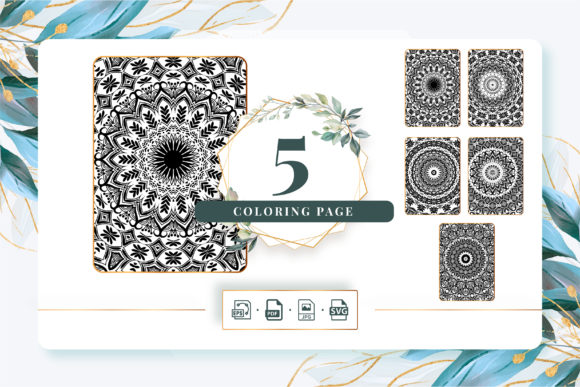
I have spent years testing designs across different mediums, and I will be honest—when I first saw Coloring Pages Bundle KDP Pack 221, I was not looking at it as a coloring book. I was looking at five highly detailed mandala layouts and immediately picturing how they would stitch out on a canvas tote, a linen pillow cover, or a soft cotton sweatshirt. That is the lens I always use. A design is only as good as how it performs in the real world, on real fabric, under real thread tension, and in front of real customers.
This bundle falls under Coloring Pages Amp and is delivered as a Graphics type product, which means you are getting raw artwork to work with. For embroidery designers, that is actually a great starting point. You are not locked into a pre-digitized file. You have the freedom to interpret the linework, decide what becomes a satin stitch, what stays as a running stitch, and how much density a particular mandala motif can handle before it turns a lightweight fabric into a stiff board.
First Impression: The Mood of These Mandalas
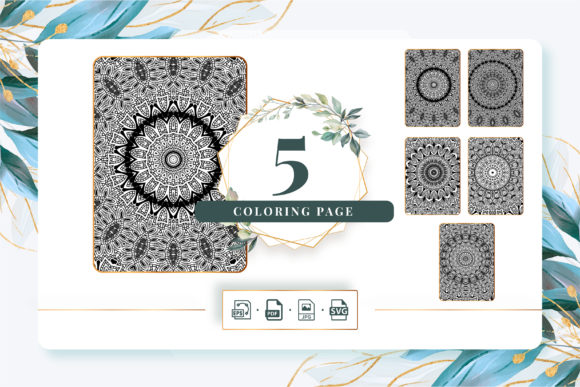
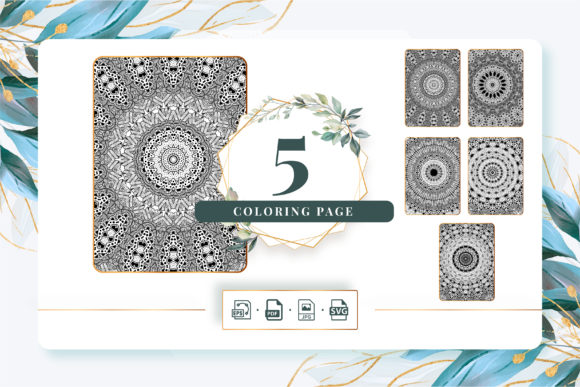
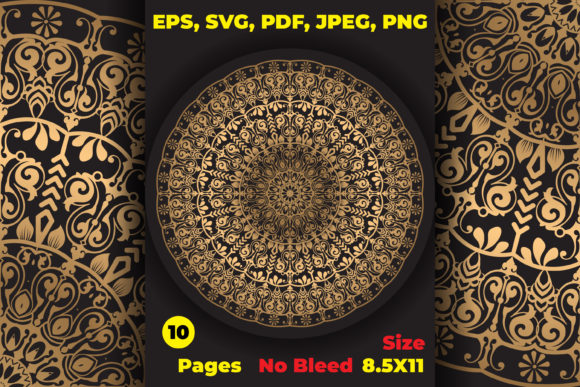
Opening Coloring Pages Bundle KDP Pack 221, the first thing that stood out was the rhythmic, circular geometry. Mandalas have a natural center, a radiating symmetry, and a meditative repetition that translates beautifully into machine embroidery. The five designs are high-detail, which means they were originally created for coloring—lots of small petals, layered rings, delicate inner curves, and ornate outer borders. When I see that level of intricacy, my designer brain immediately runs through a checklist: hoop size, stitch count, fabric weight, and stabilizer choice.
The mood is calm, structured, and slightly bohemian. It feels like something that would sell well at a craft fair, especially on products aimed at wellness, mindfulness, or home decor buyers. I could easily picture one of these mandalas stitched in soft gold thread on a natural linen pillow cover, or in dusty rose on a cream sweatshirt for a boutique clothing line. The visual personality is versatile enough to lean spiritual, artistic, or simply decorative depending on how you frame it with thread color and fabric choice.
Where This Design Naturally Belongs
Not every design fits every product, and part of being a good embroidery designer is knowing where to place something so it sings. For Coloring Pages Bundle KDP Pack 221, the mandala structure immediately suggests a few natural homes:
- Tote bags and canvas bags — A large mandala centered on a tote bag creates a striking, marketable product. The flat surface and sturdy fabric handle dense stitching well.
- Pillow covers and home decor — Linen, cotton, or cotton-blend pillow covers are ideal. A single mandala in a tone-on-tone thread color looks elevated and handmade without being loud.
- Sweatshirts and hoodies — Center-back placement or a smaller chest placement works beautifully. The circular shape naturally draws the eye.
- Tea towels and kitchen linens — A corner mandala or a centered design in a single color thread adds a handmade touch that customers love for gifting.
- Embroidered patches — If you scale down carefully, these mandalas can become intricate patches for jackets, caps, or bags.
I recently tested a similar mandala concept on a natural cotton tote for a client who runs a small wellness shop. She wanted something that felt artisanal but professional. The mandala stitched in a soft terracotta thread on unbleached canvas looked like something you would find in a high-end boutique. That is the kind of result I would expect from this bundle when executed with care.
Translating Coloring Pages into Stitch Reality
Here is where the practical designer brain has to kick in. Coloring Pages Bundle KDP Pack 221 is a Graphics product, meaning it is not a pre-digitized machine embroidery design file. You will need to digitize these mandalas yourself or work with a digitizer. That is not a drawback—it is actually an advantage if you know what you are doing. You control the stitch types, the density, the underlay, and the pull compensation.
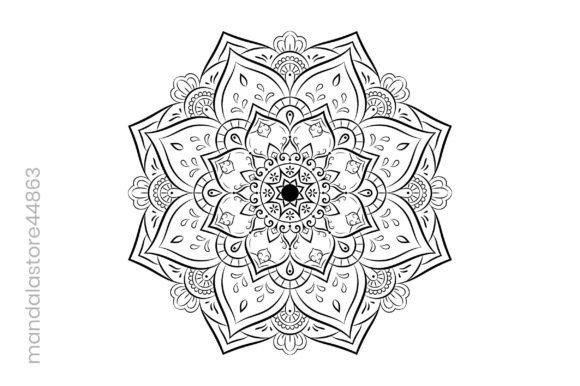
When I look at the high-detail mandala artwork, I see areas that would work beautifully as satin stitch outlines with running stitch inner details. The outermost rings could be slightly bolder satin columns, while the inner petals might benefit from a lighter fill stitch or even open areas that let the fabric breathe. One thing I always remind fellow makers: intricate coloring page art can become dense very quickly when converted to embroidery. You need to simplify strategically. Not every tiny dot or micro-petal needs to stitch out. In fact, leaving some negative space often makes the finished piece look more intentional and professional.
Thread Color Choices and Fabric Considerations
Color can make or break a mandala embroidery project. Because these designs have a lot of internal detail, I recommend testing your thread palette on scrap fabric before committing to a final product. A monochromatic approach—using a single thread color in a slightly variegated shade—can be stunning. Alternatively, a two-tone or three-tone palette with a clear hierarchy keeps the design readable from a distance.
Fabric matters enormously here. For Coloring Pages Bundle KDP Pack 221, I would avoid using these on thin, stretchy fabrics without excellent stabilization. A lightweight jersey or a flimsy cotton will pucker under the density of a detailed mandala. Instead, stick to:
- Medium to heavy woven cotton
- Linen and linen blends
- Canvas and duck cloth
- French terry or fleece-backed sweatshirt material
- Denim for patch applications
On dark fabrics, you will need to be extra careful with thread contrast. A mandala stitched in white or light gold on black canvas is striking, but any small gaps or tension issues will be immediately visible. I always test on both light and dark backgrounds before offering a product to customers. Stitch density also needs to be checked—too dense on a dark fabric can create a stiff, raised patch that feels uncomfortable against the skin on wearables.
Small Details, Hoop Size, and Real-Life Limitations
Let me be direct about something: the level of detail in these mandala designs means you will likely need a larger hoop size to do them justice. Trying to cram all five mandala variations into a tiny 4x4 hoop will result in lost detail, thread breaks, and a muddy final stitch. I would recommend a minimum of 5x7 for the simpler mandalas, and ideally 6x10 or larger for the more complex ones. If you are selling on Etsy or at craft fairs, customers notice when details get lost. A clean, well-stitched mandala in a larger format will always outsell a cramped, messy one in a smaller size.
Curved surfaces like caps and hats are trickier. A full mandala on a cap crown is difficult to hoop cleanly and often warps due to the curved seam. For caps, I would extract a portion of the mandala—maybe a half-mandala or a corner motif—rather than forcing the full circle. Patches are a smarter route for headwear: stitch the mandala on stable fabric, cut it out, and attach it as an embroidered patch.
Commercial Use and Selling Finished Products
If you are a small business owner, craft entrepreneur, or Etsy seller, you are probably wondering about commercial viability. Coloring Pages Bundle KDP Pack 221 is listed as a KDP template graphic, which typically means it is intended for print-on-demand use. Before you digitize and sell finished embroidered products, you need to confirm the licensing terms. Not all graphics licenses automatically extend to embroidery or physical product sales. I always advise checking with the seller or reviewing the license file to make sure you are covered for commercial embroidery, handmade product sales, and digital embroidery file redistribution if that is part of your business model.
Once licensing is confirmed, these mandalas hold strong commercial potential. They sit in a niche that is perennially popular—wellness, mindfulness, bohemian decor, spiritual gifts, and artistic apparel. A well-stitched mandala on a quality product can command a premium price. I have seen mandala-embroidered sweatshirts sell for $55 to $85 at boutique markets, and mandala tote bags move quickly in the $30 to $45 range. The key is in the execution, not just the design itself.
Practical Designer Notes and Testing Checklist
Before you stitch Coloring Pages Bundle KDP Pack 221 onto a final product, here is a testing checklist I use for every mandala-style design I work with:
- Test on scrap fabric first — Match the fabric type and weight to your final product. Do not test on cotton if your final piece is linen.
- Check thread color contrast — Hold the stitched sample at arm's length. Can you still read the mandala clearly? If not, adjust your palette.
- Review stitch density — Too dense and the fabric will buckle or feel stiff. Too light and the design looks unfinished.
- Confirm hoop size — Measure the digitized design dimensions and make sure it fits comfortably in your hoop with room for the inner ring to clear the stitching area.
- Inspect small details — Run a test stitch and look for thread breaks, skipped stitches, or areas where details blur together. Simplify if needed.
- Test in black and white — A quick monochrome mockup or test stitch helps you see the design's structure without color distraction.
- Compare light and dark fabric backgrounds — The same mandala will look completely different on natural linen versus charcoal canvas. Test both.
- Use proper stabilizer — For detailed mandalas, I typically use a medium-weight cutaway stabilizer on wearables and a tear-away on sturdy wovens like canvas.
- Wash test — If the product will be washed frequently, stitch a sample and run it through a wash cycle to check for thread wear, shrinkage, or distortion.
- Confirm licensing — Double-check that your intended use—personal projects, client work, commercial product sales, or digital file resale—is covered.
Who Should Use This Bundle and Who Should Wait
Coloring Pages Bundle KDP Pack 221 is a strong choice for embroidery designers who already have digitizing skills or access to a reliable digitizer. If you are comfortable interpreting artwork, making judgment calls on stitch types, and simplifying details for fabric, you will get a lot of mileage out of these five mandalas. They are versatile, visually appealing, and tap into a niche with proven buyer demand.
For beginners who are just learning to stitch and do not yet have digitizing experience, I would recommend starting with pre-digitized machine embroidery design files first. The artwork in this bundle is beautiful, but it requires technical translation before it is embroidery-ready. That said, if you are a beginner who is willing to learn digitizing, these mandalas are a great practice set—the symmetry means you can often digitize one quadrant and mirror it, saving time while building your skills.
A Real Scenario: The Boutique Tote Bag Project
Let me walk through a real scenario. A client reached out wanting a custom embroidered tote bag for her small aromatherapy business. She wanted something that felt handmade, calming, and professional. I pulled up the mandalas from Coloring Pages Bundle KDP Pack 221 and selected one with a balanced outer ring and open center. I digitized it with a soft sage green thread, kept the density moderate, and stitched it onto a heavyweight natural canvas tote. The result was exactly what she wanted—a product that looked intentional, artisanal, and gift-ready. She sold out of her first batch at a weekend market and reordered immediately. That is the kind of practical outcome I look for when evaluating any design asset. Coloring Pages Amp and Graphics bundles like this one earn their place in my library when they can produce results like that.
In the end, Coloring Pages Bundle KDP Pack 221 is not a plug-and-play embroidery file. It is a creative starting point. Treat it as raw material, and it can become something genuinely beautiful on fabric. Test carefully, digitize thoughtfully, and choose your products wisely. Your customers will feel the difference between a rushed stitch and a considered one, and that difference is what builds a craft business that lasts.